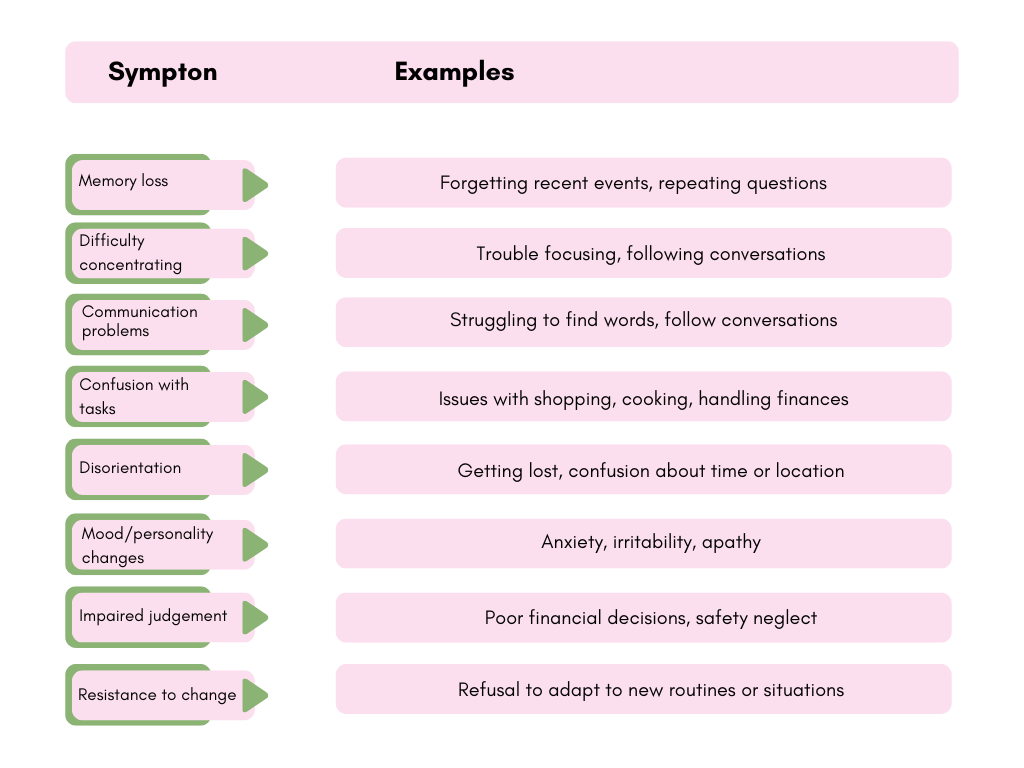
Dementia is not one single condition. The symptoms can differ significantly depending on the type:
Alzheimer’s Disease
- Difficulty remembering recent events, despite a clear memory of the distant past
- Poor concentration and confusion
- Difficulty recognising people or objects
- Problems with planning, organisation and decision-making
- Withdrawal from social interactions
- Slow or repetitive speech
Vascular Dementia
- Issues with concentration, planning, and processing thoughts
- Mood and personality changes
- Slowed thinking and communication difficulties
- Mild memory problems, especially with recent events
Frontotemporal Dementia
Behavioural Variant (bvFTD):
- Reduced motivation and empathy
- Inappropriate or repetitive behaviours
- Obsessive habits and poor decision-making
- Changes in eating habits (e.g., sugar cravings, alcohol misuse)
- Lack of insight into one’s own behaviour
Primary Progressive Aphasia (PPA):
- Word-finding difficulties and grammatical errors
- Vocabulary loss
- Difficulty identifying objects and their purpose
- Disrupted conversations and sentence construction
Lewy Body Dementia
- Visual hallucinations
- Sleep disturbances, vivid dreams
- Fluctuating alertness and cognition
- Parkinson-like movement symptoms (e.g., tremors, stiffness)
- Balance and continence issues
- Delusions, paranoia, and anxiety
- Impaired sense of smell
Mixed Dementia
- A combination of symptoms from multiple dementia types
- Progression may be more noticeable or quicker
Its important to get diagnosed and see your GP if you have some of these symptoms, keep a diary and record the frequency, when they started and if they have increased over time. The more information you provide can help support an early diagnosis and get you the support you need.
How Does Your Body Warn You That Dementia is Forming?
Your body may not send out loud alarms, but subtle signs such as frequent confusion, struggling with everyday decisions, or persistent fatigue due to mental strain may be early indicators that something is amiss. Listening to these cues is crucial.
Understanding the Difference: Dementia vs. Normal Ageing
It’s normal to forget names occasionally or misplace your keys. What’s concerning is when these forgetful moments are frequent, unexplained, and begin to disrupt daily life. Unlike normal ageing, dementia symptoms are progressive and often irreversible.
What Is the Number One Trigger for Dementia Behaviour?
Change is one of the most significant triggers for behavioural shifts in dementia. A new environment, unfamiliar faces, or disruption to a routine can provoke confusion, anxiety, or agitation. That’s why stability and personalised care are so important during this stage.
When to Seek Help
If you’ve started noticing persistent changes in memory, thinking, or behaviour—especially when they begin affecting everyday life—it’s time to consult a GP. Early action can make a real difference.
To support your consultation, consider keeping a simple record or diary of symptoms. Note when they began, how frequently they occur, and whether they’re changing over time. This practical step can help healthcare professionals reach a timely diagnosis and connect you with the support you need sooner.
At A Class Care, we understand how overwhelming this first step can feel—but you don’t have to take it alone. Our team offers specialist early-stage dementia care designed around your needs, helping to maintain independence and quality of life from day one.
Supporting Someone You Love
Support doesn’t stop at diagnosis. Here are 10 ways to support someone living with Alzheimer’s, from practical tips to emotional reassurance.
For additional guidance, Dementia UK offers valuable insights and resources on the signs and symptoms of dementia.
Summary: Know the Signs