Finding the right kind of support for a young adult with disabilities is a significant, deeply personal decision. Whether you're planning for yourself or supporting someone else, it’s important to understand the differences between assisted living and supported living—especially if you're looking for care options across the UK.
At A Class Care, we specialise in personalised, at-home support that promotes independence, dignity, and confidence.
Individual-Led Care with Real Choice
We believe that young adults should take the lead in decisions about their own care. Everyone’s circumstances are different, so we don’t apply a one-size-fits-all approach. Instead, we tailor every care plan around personal goals, preferences, and values. It’s your life—and our job is to support you in living it fully.
What Does Assisted Living Mean for Young Adults?
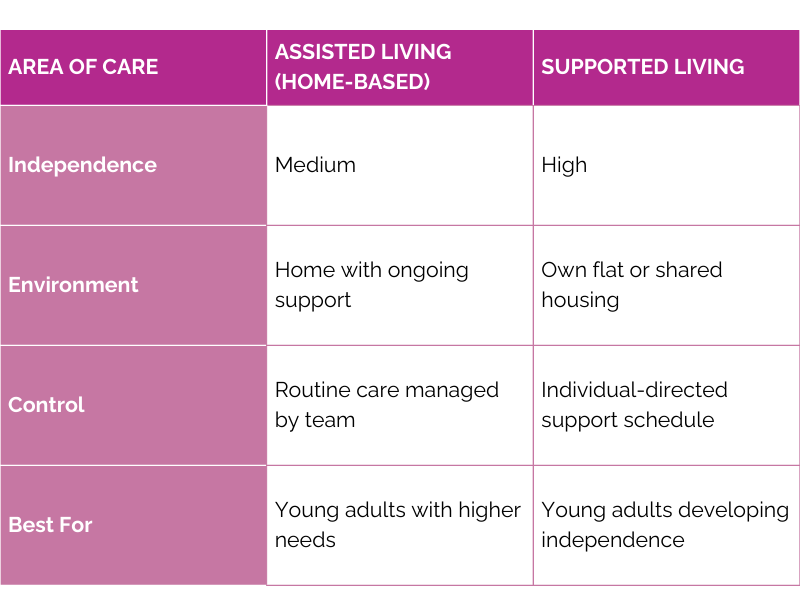
In general, assisted living refers to structured support for individuals who may need help with everyday activities like bathing, dressing, managing medication, or preparing meals. Often associated with residential settings, assisted living can also happen at home with the right support team.
At A Class Care, we do not offer residential care homes. We provide a home-based alternative—offering professional, tailored care services delivered directly in the young adult’s own home.
Example:
A young adult with a physical disability who requires help getting ready each morning might receive daily visits or live-in support from a trained care professional.
Our Home-Based Assisted Living Model Includes:
• Care routines structured around the individual
• One-on-one in-home support
• Trusted carers trained for complex needs
• Services designed to ensure safety and comfort at home
What Is Supported Living and Who Is It For?
Supported living focuses on helping individuals maintain independence in their own homes. Whether living alone or with housemates, young adults in supported living situations decide how and when they receive help.
This model suits those who manage well independently but need occasional or scheduled support—often young adults with autism, learning disabilities, or mild mental health conditions.
Example:
A young adult living in a flat who needs help with food shopping and managing bills may benefit from a few hours of weekly support.
Highlights of Supported Living:
• Fully customisable support hours
• Independence-first approach
• Community engagement encouraged
• Ideal for people developing life skills
Interested in how supported living promotes growth? Explore our Comprehensive Guide to Supported Living for Young Adults.
Funding Care: Understanding Budget and Direct Payments
Finances should never be a barrier to quality care. That’s why we help each person create a care plan that respects both their personal needs and their budget.
What’s more, if you're eligible for a direct payment from your local authority, you can use it to select A Class Care as your provider. That means:
• You choose your support staff
• You control how and when care is delivered
• You receive guidance from us at every stage
This flexible funding model empowers young adults to take charge of their own care journey.
Comparing the Two Models